Fabian Scheifele

Economist · World Bank · Finance, Competitiveness & Investment Global Practice, Europe & Central Asia

I am an economist in the World Bank's Finance, Competitiveness and Investment Global Practice for the Europe and Central Asia region. My research focuses on the impact of green and digital technologies and public policies on firm performance and employment. My work has been published in Energy Economics, Energy Policy, and Renewable and Sustainable Energy Reviews.

Prior to joining the World Bank, I worked for the German Development Bank KfW and as a consultant for the OECD. I hold a PhD in Economics from the Technical University of Berlin, an MSc in International Political Economy from the London School of Economics, an MA in International Economic Policy from Sciences Po Paris and a BSc in International Business Administration from the Rotterdam School of Management.

Fabian Scheifele

Research

Peer-Reviewed Publications

  • Scheifele, F., Bräuning, M. and Probst, B. (2022). The impact of local content requirements on the development of export competitiveness in solar and wind technologies. Renewable and Sustainable Energy Reviews.
    Paper
    This paper examines the impact of local content requirements (LCRs) on the development of export competitiveness in solar and wind technologies. Using a panel dataset covering countries that implemented LCRs in renewable energy, we analyse whether these policies helped domestic firms develop capabilities that translated into international competitiveness. The findings suggest that LCRs had mixed effects, supporting domestic industry development in some contexts while limiting export competitiveness in others.
  • Münch, F. and Scheifele, F. (2023). Nurturing National Champions? Local Content in Solar Auctions and Firm Innovation. Energy Policy.
    Paper
    This paper investigates whether local content requirements (LCRs) in solar energy auctions stimulate firm-level innovation. Using detailed data from Brazil's solar auction program, we exploit variation in LCR stringency across auction rounds to identify the causal effect on patenting and R&D activity among domestic solar firms. We find evidence that LCRs can spur innovation among protected firms, consistent with an infant industry argument, but these effects are concentrated among larger, more capable firms.
  • Scheifele, F. and Popp, D. (2025). Not in my backyard? The local impact of wind and solar parks in Brazil. Energy Economics.
    Paper News Coverage
    This paper estimates the local economic impact of wind and solar energy parks in Brazil using a difference-in-differences design. Combining plant-level data on renewable energy installations with municipal economic outcomes, we find that renewable energy parks generate significant positive effects on local GDP and employment during the construction phase. However, these effects are more muted during the operational phase, suggesting limited long-run local spillovers. We find no evidence of negative property value effects ("not in my backyard" responses) in the Brazilian context.

Working Papers

  • Scheifele, F., Münch, F., Bouziri, A. and Firpo, T. E-commerce for export: Experimental evidence from Tunisia.
    AEA Registry
    We study the impact of e-commerce adoption on export performance among small and medium-sized enterprises in Tunisia using a randomized controlled trial. Treated firms received assistance in setting up online storefronts on international e-commerce platforms, along with training in digital marketing and logistics. We examine effects on export revenues, the number of export markets reached, and firm survival. The study is registered on the AEA RCT Registry.
  • Münch, F., Scheifele, F., Bouziri, A. and Firpo, T. Inclusive international trade: Assisting female-led firms. Supported by SGB Evidence Fund of International Growth Centre.
    Paper Cornell Blog IGC Blog IGC Funding
    This paper examines the impact of export consortia on the international trade performance of female-led firms in Tunisia. Using a randomized controlled trial, we evaluate a program that grouped female entrepreneurs into consortia to share the fixed costs of exporting — including trade fair participation, joint marketing, and logistics. We find significant positive effects on export participation and revenues, with evidence that the consortium model reduces barriers that disproportionately constrain women-owned businesses from accessing international markets.
  • Münch, F., Scheifele, F., Bouziri, A. and Firpo, T. Attracting Firms to Government Programs: Theory and Evidence from Randomized Controlled Trials in Tunisia.
    Paper
    Government programs to support firms often struggle with low take-up, limiting their effectiveness. This paper develops a theoretical framework for understanding firm participation decisions and tests predictions using randomized controlled trials in Tunisia. We study how different outreach strategies — including targeted communication, peer referrals, and simplified application processes — affect enrollment in business support programs. Our findings provide actionable guidance for program designers seeking to maximize participation among their intended beneficiaries.

Policy Reports

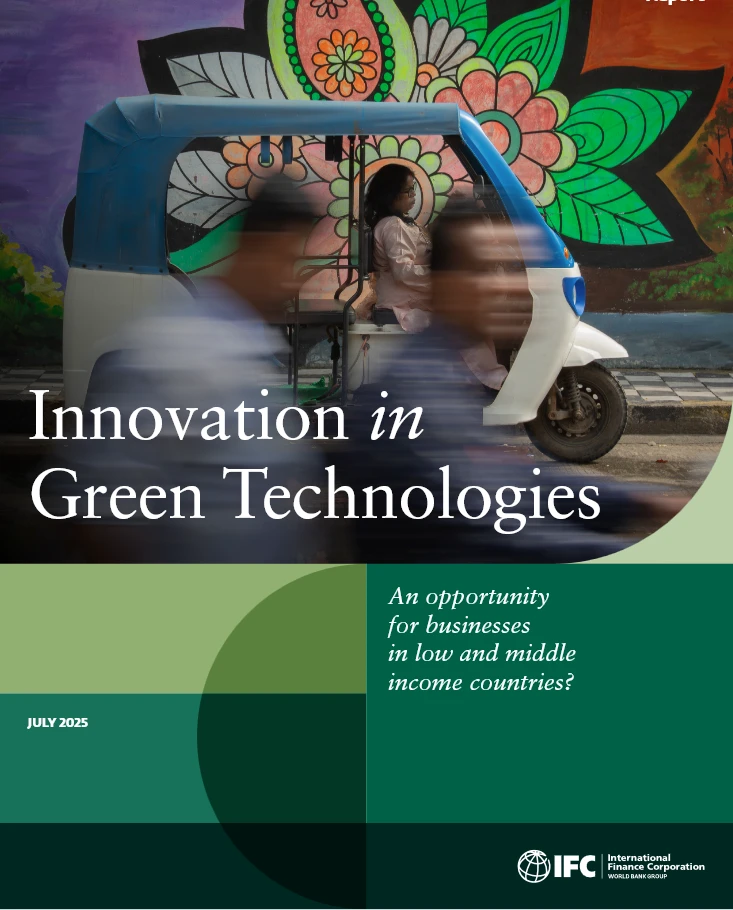
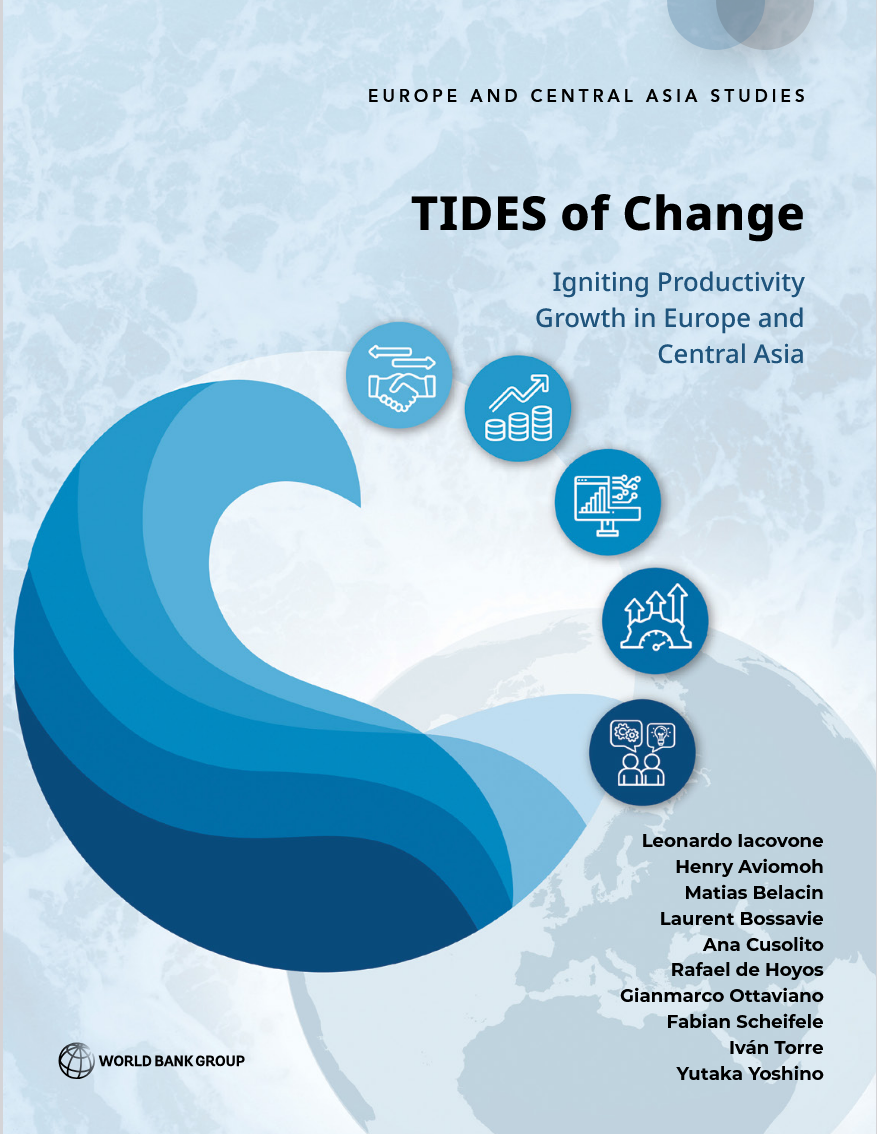
TIDES of Change report cover

World Bank · 2025

TIDES of Change: Igniting Productivity Growth in Europe and Central Asia

Europe and Central Asia is at a turning point. After a period of convergence and reform-driven growth during the first decade of the 2000s, the region's productivity engine has lost momentum. Total factor productivity growth has halved since the global financial crisis, and the gains from capital deepening and labor expansion are no longer sufficient to sustain economic growth.

This report lays out a new agenda for boosting productivity. Drawing on unique firm-level data from across the region, it shows how deeper trade integration, smarter investment, and adoption of technology — coupled with improved firm capabilities and investments in workers' skills — can unlock significant productivity gains. The path forward is captured by the policy framework of Trade, Investment, Digitalization, Efficiency, and Skills (TIDES).

Report Seminar @OECD Euractiv
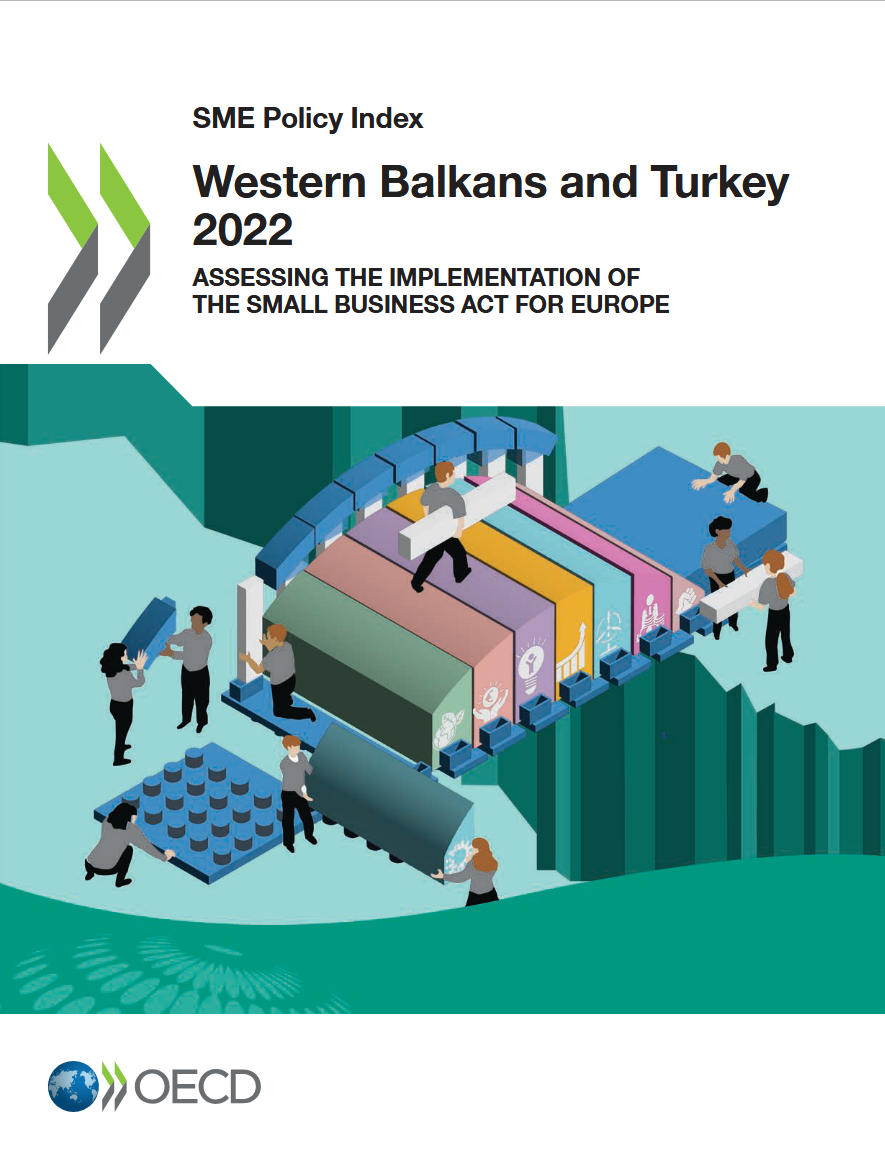
OECD SME Policy Index report cover

OECD · 2022

SME Policy Index: Western Balkans and Turkey 2022 — Assessing the Implementation of the Small Business Act for Europe

Lead Author of Chapter 8 on Standards and Technical Regulation

Small and medium-sized enterprises are essential drivers of sustainable economic growth in the Western Balkans and Turkey, where they make up 99% of all firms, generate 65% of value added and account for 75% of employment. This report provides an overview of the implementation of the Small Business Act for Europe during 2019–22, helping policy makers design, implement and monitor policies to support SME recovery from the pandemic, boost competitiveness, and enhance regional economic growth and resilience.

Report
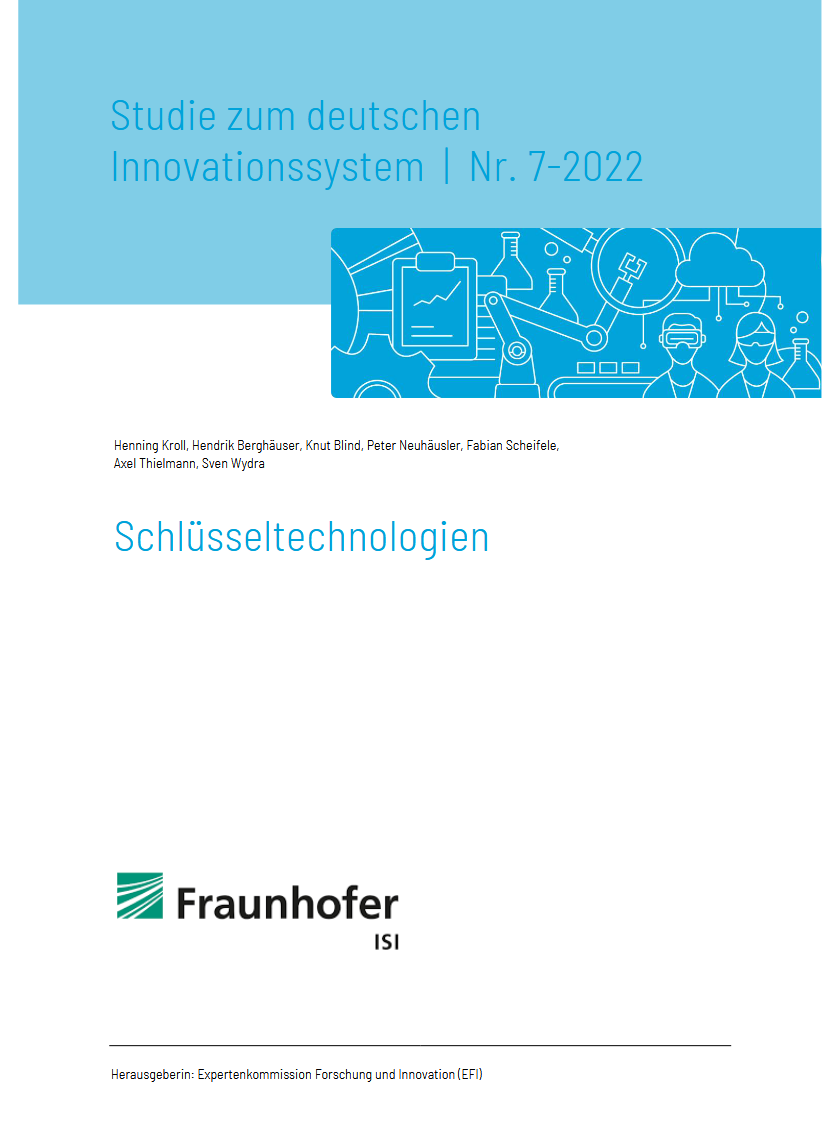
Fraunhofer ISI Key Enabling Technologies report cover

Fraunhofer ISI · 2022

Key Enabling Technologies: A Study on the German Innovation System

This report examines the role of key enabling technologies in the German innovation system across three central objectives: tracing the academic and political origins of the concept of "key enabling technology" and identifying which technologies currently best fulfill the derived criteria; empirically assessing Germany's position in selected enabling technology areas across research and development, foreign trade, international standardization, and international cooperation; and highlighting key obstacles for German innovators while outlining policy measures implemented across the EU-27, USA, and China.

Report News Coverage